Pulseless Electrical Activity in ICU
HPI:
___ for whom a Code Blue was called for cardiopulmonary resuscitation.
Per available history at this time, the patient became pulseless and apneic while in the ICU as initially noted by bedside nursing staff.
Down-time prior to ACLS was initiated by ICU staff is unknown.
ROS: not performed because the patient’s level of distress was too severe to obtain further history
Physical Exam:
General: Unresponsive. No evidence of trauma.
Respiratory: ___ ETT in place; breath sounds equal bilaterally.
Cardiovascular: no spontaneous pulse
Abdomen: No distention
Head: no trauma apparent
Neck: no thyromegaly, no JVD
Extremities: no signs of trauma
Skin: intact
Pulses: no peripheral pulse
Neuro: ___ pupils fixed
MDM
Initial Rhythm: PEA
Cardiac compression was performed by staff in order to sustain blood flow. The patient was ventilated and oxygenated. The patient received appropriate ACLS measures and these were repeated as necessary throughout the resuscitation. CPR was performed under my direct supervision and guidance.
See nursing note for medications and times given.
Critical care time spent 30 minutes in coordination of efforts between myself as well as the rest of the ICU staff.
If patient passes away
___Family members were notified that the patient may pass away soon.
Family members requested discontinuation of resuscitation efforts.
After discontinuation of resuscitation, I did not observe spontaneous breathing or appreciate heart sounds on auscultation. There was no palpable radial pulse. The patient did not respond to nail bed stimuli. I examined the patient and there was no pupillary response to light.
Patient was pronounced deceased.
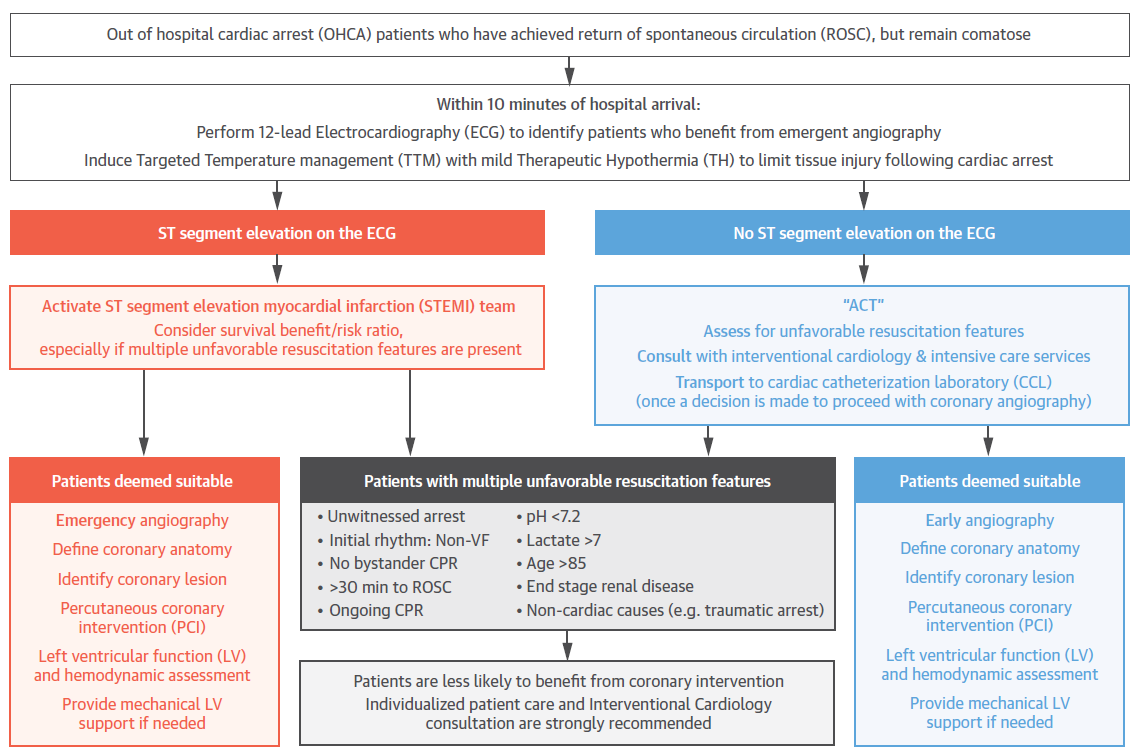
PEARLS
- Post-ROSC Care
- Will Cool to 32-34ºC as soon as possible, within 4 hours.
Will continue Sedation. - Will order ABG, BMP, CXR, ECG to reassess
- Will maintain normoxia PaO2 80-120
- Will allow permissive hypertension
- Will Cool to 32-34ºC as soon as possible, within 4 hours.
 tydotphrase.com