Last reviewed: March 2026
Contents
MDM Templates
Viral Exanthem / Benign Rash
Patient presents with diffuse rash without systemic toxicity. They deny fever, dyspnea, oral or mucosal involvement, palm/sole involvement, syncope, arthralgias, or recent high-risk exposures. They are well appearing and hemodynamically stable.
Presentation is most consistent with viral exanthem / benign drug reaction. History and exam lower suspicion for SJS/TEN, meningococcemia, vasculitis, anaphylaxis, necrotizing fasciitis, secondary syphilis, or new HIV seroconversion.
Plan: Antihistamines for pruritis (cetirizine 10 mg PO daily or diphenhydramine 25 mg PO q8h). Calamine lotion for symptomatic relief.
Disposition: Discharge with return precautions for fever, mucosal involvement, blistering, worsening despite treatment, or systemic symptoms. PCP follow-up within 48 hours.
Contact Dermatitis
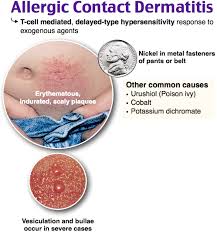
Patient presents with focal erythematous rash with scaling, induration, and vesiculation in a distribution consistent with contact exposure. They deny systemic symptoms, mucosal involvement, or distant skin findings.
Presentation is most consistent with allergic or irritant contact dermatitis. History and exam lower suspicion for cellulitis, herpes zoster, bullous pemphigoid, or SJS.
Plan: Avoidance of offending agent. Topical corticosteroid (triamcinolone acetonide 0.1% applied to affected areas BID). Antihistamines for pruritis.
Disposition: Discharge with PCP or dermatology follow-up if not improving within 1-2 weeks.
Erythema Multiforme
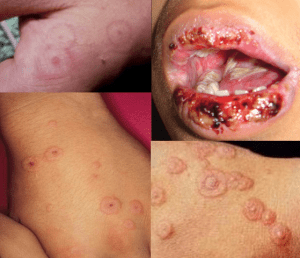
Patient presents with targetoid (iris) lesions distributed on extremities. They deny significant oral, ocular, or genital mucosal involvement. They are well appearing without hemodynamic compromise.
Presentation is most consistent with erythema multiforme minor, most commonly triggered by HSV or medication exposure. Without significant mucocutaneous involvement, this does not meet criteria for SJS. History and exam lower suspicion for SJS/TEN, vasculitis, or urticaria.
Plan: Oral antihistamines, topical corticosteroids, acetaminophen for discomfort. If HSV-triggered and recurrent, consider suppressive acyclovir through outpatient follow-up.
Disposition: Discharge with return precautions for oral blistering, eye pain/redness, skin sloughing, or systemic illness. Expected self-limited course of 2-6 weeks. PCP follow-up within 1 week.
Erythema Nodosum
Patient presents with tender, erythematous nodules on the bilateral shins consistent with erythema nodosum. They deny cough, weight loss, or GI symptoms. No mucosal involvement.
Presentation is most likely reactive — common triggers include streptococcal pharyngitis, oral contraceptives, pregnancy, sarcoidosis, IBD, and coccidioidomycosis. History and exam lower suspicion for cellulitis, DVT, vasculitis, or erythema multiforme. CXR without evidence of sarcoidosis or tuberculosis.
Plan: NSAIDs for pain and inflammation. Supportive care with elevation and compression.
Disposition: Discharge with PCP follow-up within 1 week for further workup of underlying etiology if recurrent.
Eczema / Dyshidrotic Eczema
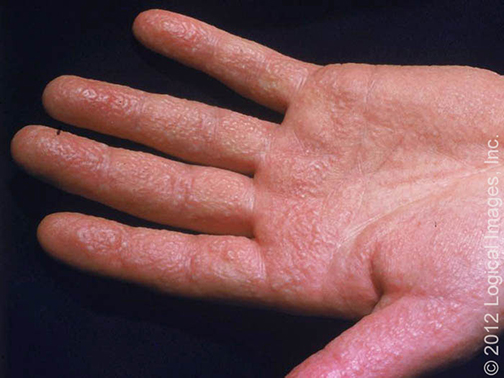
Patient presents with pruritic vesicular eruption on the hands / fingers consistent with dyshidrotic eczema (pompholyx). They deny systemic symptoms, spreading erythema, or fever.
Presentation is consistent with eczema flare. History and exam lower suspicion for contact dermatitis requiring different management, tinea manuum, scabies, or palmar psoriasis.
Plan: Avoidance of irritants (detergents, solvents). Emollients (petroleum jelly) applied frequently after hand washing. Mid-to-high potency topical corticosteroid (triamcinolone 0.5% cream BID to affected areas).
Disposition: Discharge with dermatology referral if refractory to topical steroids.
Severe dyshidrotic eczema with disabling symptoms:
Consider oral prednisone taper: 40 mg daily x 1 week, then taper by 50% weekly over 3-4 weeks. Dermatology follow-up for steroid-sparing agents.
Clinical Education
Dangerous Rashes Not to Miss
The rash you cannot miss is the one with systemic toxicity. Any rash + hemodynamic instability, mucosal involvement, skin sloughing, or petechiae/purpura warrants aggressive workup. Key entities:[1]
| Rash | Key Feature | Action |
| SJS/TEN | Mucosal involvement + skin sloughing/blistering + drug exposure | Burn center referral if >10% BSA involvement |
| Meningococcemia | Petechiae/purpura + fever + toxic appearance | Immediate antibiotics, resuscitation |
| RMSF | Petechial rash starting on wrists/ankles + fever + tick exposure | Doxycycline empirically — do not wait for serologies |
| Necrotizing fasciitis | Pain out of proportion + dusky skin + crepitus + systemic toxicity | Emergent surgical consultation |
| Secondary syphilis | Diffuse rash WITH palm/sole involvement | RPR, treat with IM penicillin |
Palm and sole involvement narrows the differential: secondary syphilis, RMSF, hand-foot-mouth disease, SJS, erythema multiforme, endocarditis (Janeway lesions/Osler nodes).[1]
Topical Steroid Selection
| Potency | Agent | Use |
| Group 1 (super high) | Clobetasol propionate 0.05% | Thick plaques on palms/soles. Short courses only (2 weeks max). |
| Group 3-4 (high-medium) | Triamcinolone acetonide 0.1-0.5% | Workhorse for most dermatitis on trunk/extremities |
| Group 6-7 (low) | Hydrocortisone 1-2.5% | Face, skin folds, groin, pediatric use |
Rule of thumb: Use the lowest potency that works for the location. Face and skin folds get low-potency (risk of atrophy). Palms, soles, and thick plaques need high-potency.[2]
Rash History Framework
Four questions that narrow any rash differential:[1]
Is there mucosal involvement? (SJS, EM major, pemphigus, HSV). Is there palm/sole involvement? (syphilis, RMSF, EM, HFM). Is the patient febrile or toxic? (meningococcemia, RMSF, TSS, nec fasc). Any new drugs in the past 2-8 weeks? (drug eruption, SJS, DRESS).
Bedbugs vs scabies: Bedbugs produce grouped bites (“breakfast, lunch, dinner”) on exposed skin. Scabies produces diffuse pruritic papules with burrows, especially in web spaces, wrists, waistline. Scabies is treated with permethrin 5% cream; bedbugs require environmental eradication.
 tydotphrase.com